Industry Impact
Who Benefits From the Citrine Platform
From executives to product developers, technical services to supply chain, the Citrine Platform helps every function make smarter, faster decisions
From Lab to Launch, Faster.
The Citrine Platform helps different functions across a chemical company make better decisions with the messy data they already have. For technical teams, that means faster iteration and better product development decisions. For business and operational teams, it means clearer trade-offs, stronger resilience, and a better view of where value is being created.
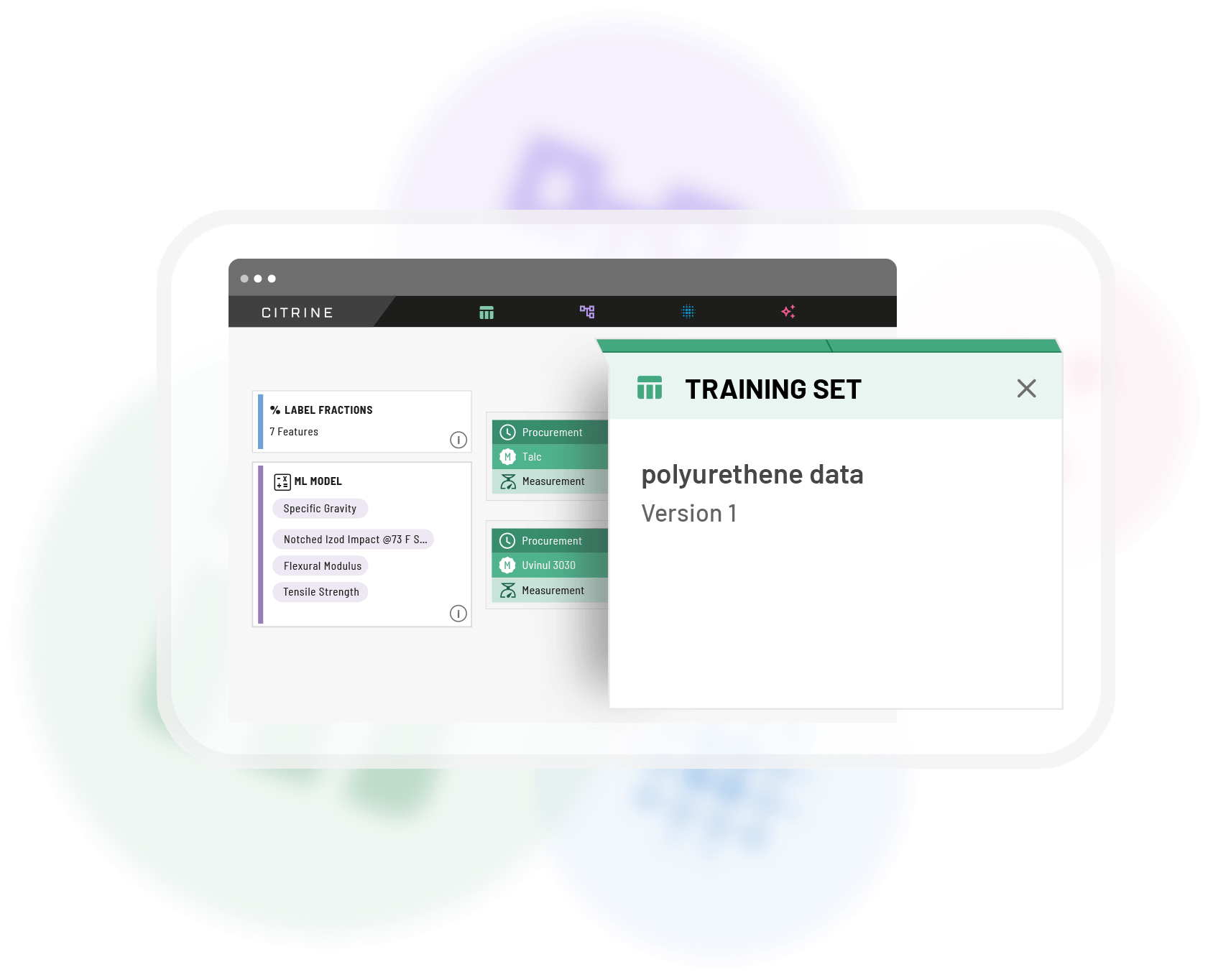
Technical Teams
Faster iteration and better product development decisions
Business Teams
Clearer trade-offs and stronger operational resilience
All Functions
A better view of where value is being created
Portfolio Confidence at the Leadership Level
Business executives need a clear view of where product development investment is creating value and where portfolio risk is building. The Citrine Platform gives leaders a better way to evaluate trade-offs across cost, performance, speed, and resilience so they can make portfolio decisions with more confidence.
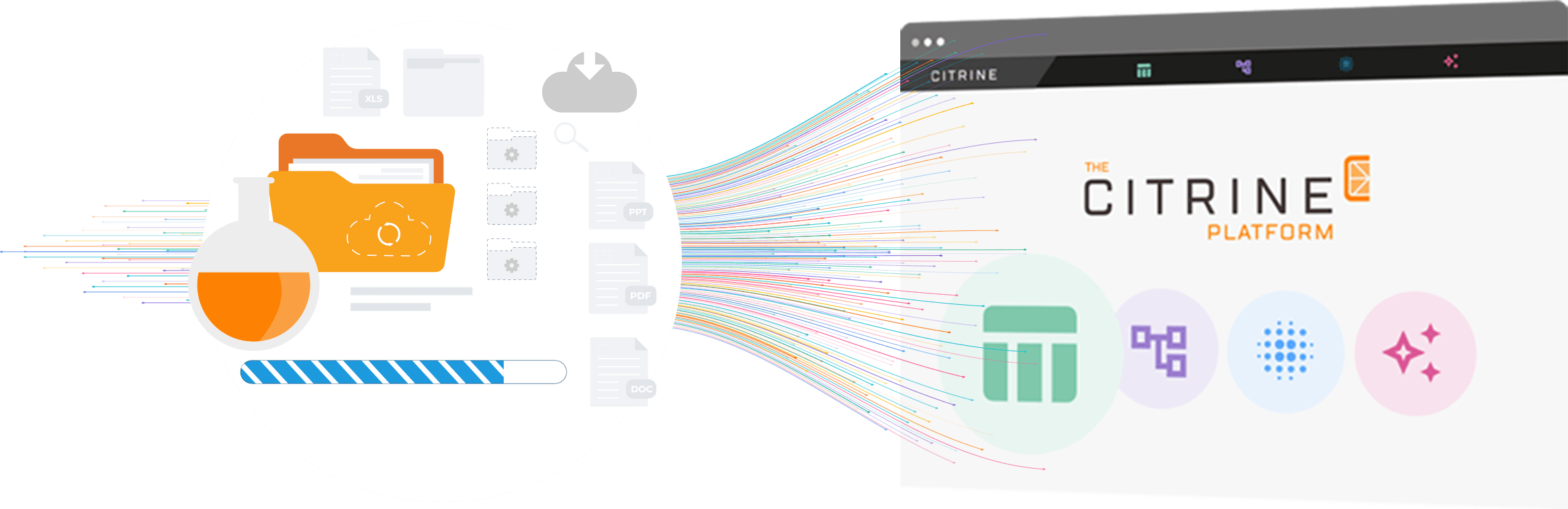
Portfolio Performance
Evaluate portfolio performance across multiple performance and business dimensions
Risk-Reward Clarity
Make risk-reward trade-offs more explicit across product development programs
Faster Decicions
Support faster decisions with stronger technical and commercial visibility
Related resources:
Understand the business case
AI-Guided Experimentation, Faster Technical Wins
Product development teams use the Citrine Platform to achieve target properties with 50-80% fewer experiments. They love the insights AI generates into their chemistry and make use of the knowledge encoded into models and datasets to speed up onboarding of new team members. Product development teams value the novel suggestions driving innovation. Whether reformulating without PFAS, reducing raw material cost, transferring production to a new location, or developing novel materials, the Citrine Platform reduces the risk of failed experiments.
- Define target performance specifications and explore trade-offs
- Reduce the number of experimental iterations needed to hit target properties
- Focus lab work on the most valuable next experiments
Build Competitive Advantage, Not Infrastructure
Reduce MLOps Burden
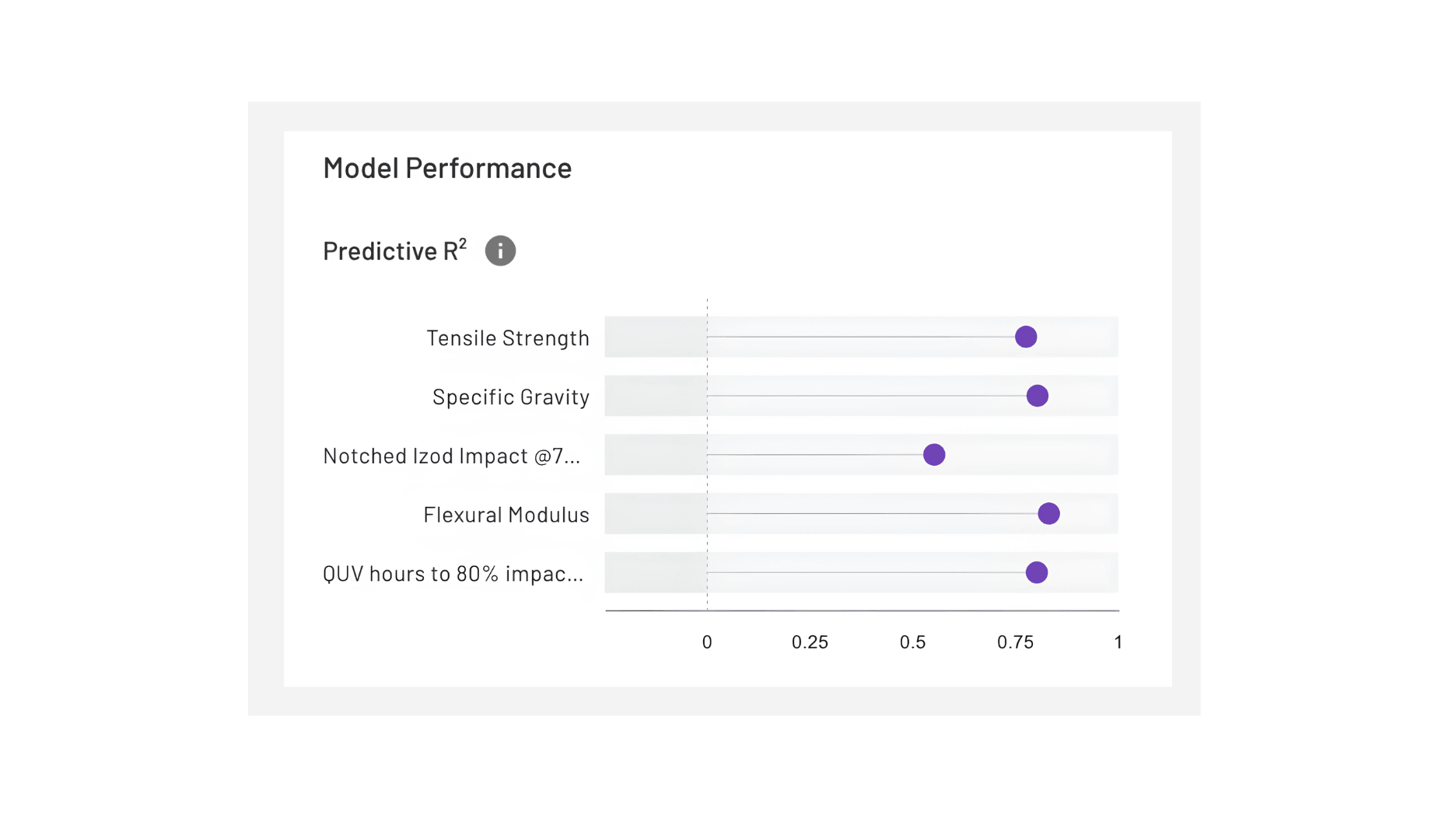
Reduce MLOps and platform maintenance burden with a purpose-built, secure, scalable environment
Improve Predictions
Give data scientists a dedicated place to improve predictions with their domain expertise
Enable Self-Service
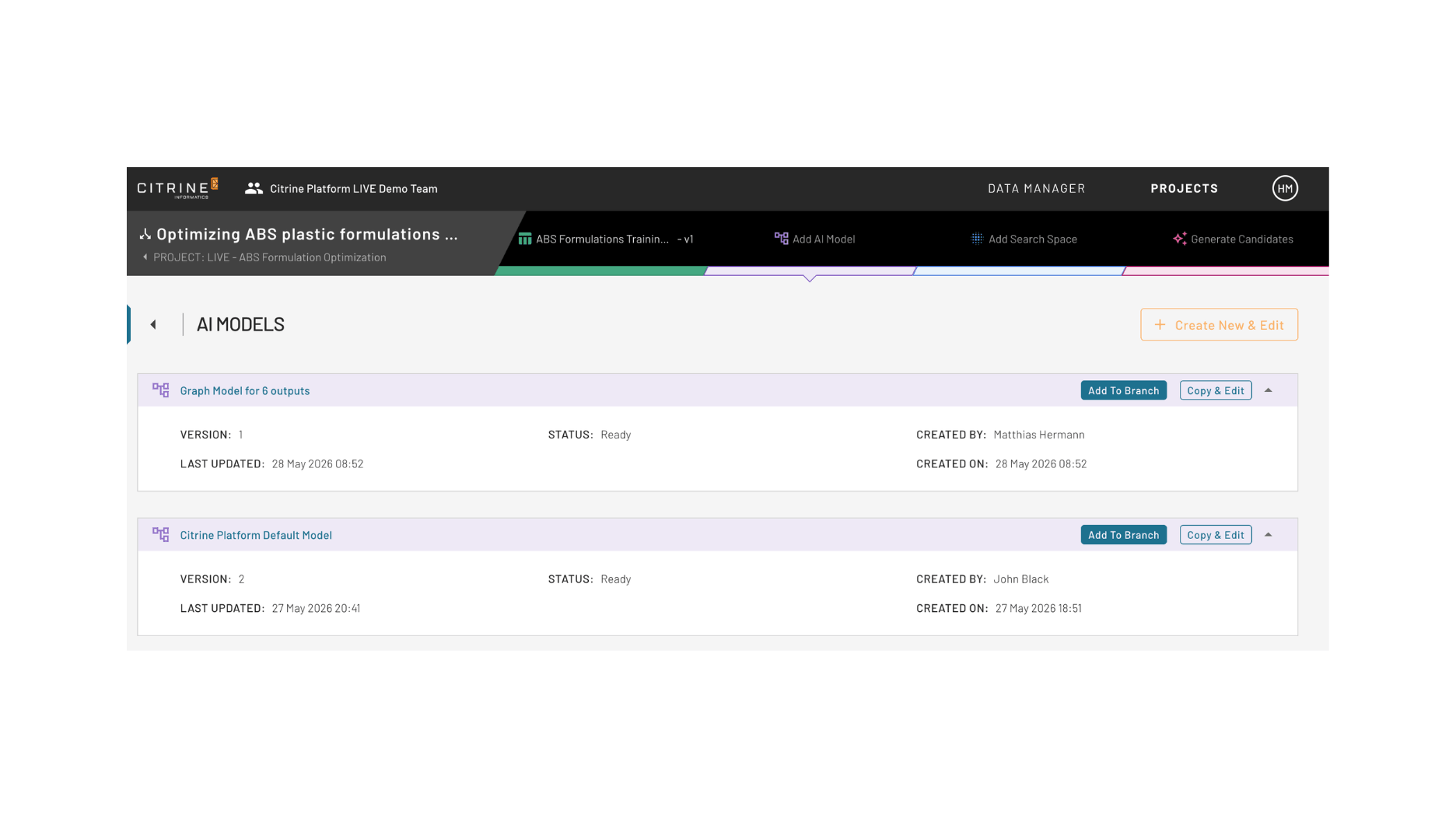
Let product experts self-serve instead of waiting in a model backlog, freeing data science capacity
From Broad Targets to Practical Formulation Decisions
Lower-Impact Raw Materials
Support reformulation toward lower-impact raw material choices
Visible Trade-Offs
Make sustainability trade-offs more visible alongside performance and cost
Regulatory Agility
Help teams evaluate options faster when regulatory or customer demands shift

White Paper – Increasing Polymer Sustainability Using AI
This white paper examines how the Citrine Platform leverages advanced artificial intelligence to help polymer manufacturers meet sustainability challenges while maintaining performance and profitability.
Connect Lab Decisions to Production Outcomes
Production teams benefit when product development choices connect more directly to process performance, throughput, and operating cost. The Citrine Platform enables experts to constrain processing steps and parameters to what is practically achievable at scale, resulting in smoother scale-up. Technical performance, processing costs, and energy use can be simultaneously optimized.
- Connect formulation and process decisions more directly to production outcomes
- Identify process changes that reduce cost, energy use, or waste
- Surface production savings opportunities earlier in the development cycle
Customer Impact
ANNUAL SAVINGS
Identified by one customer in their first year by optimizing yields and accelerating scale-up
Respond Faster, Advise With Confidence
Technical Services teams need to respond quickly and credibly when customers ask what is possible, what will work, and what trade-offs they should expect. This is especially important in specialty chemicals, where technical guidance is often a major differentiator. In the Citrine Platform, Technical Services teams can use application models, entering customer requirements as targets and quickly understanding what is achievable.
— Stepan Business Manager for the Liquid Dishwash Project
Faster Customer Response
Respond to customer formulation and application questions faster with model-backed answers
Evidence-Based Recommendations
Support recommendations with stronger technical evidence and clearer trade-offs
Knowledge Transfer
Help teams transfer prior project knowledge across accounts and regions

White Paper – Transforming Customer Responsiveness
This white paper explores how artificial intelligence is fundamentally transforming the formulation development landscape, enabling chemicals suppliers to achieve unprecedented levels of customer responsiveness while simultaneously reducing development costs and accelerating time-to-market.
Resilience Before Disruption Forces a Reaction
Supply Chain teams need better visibility into material substitutions, supplier risk, and cost exposure before disruption forces a reaction. The Citrine Platform can be used to understand which raw materials are irreplaceable, where rationalization can happen, and what to do if there is price volatility.
Material Substitutions
Evaluate material substitutions with clearer visibility into likely trade-offs
Resilience Strategies
Support multi-supplier and resilience strategies with better technical insight
Negotiating Position
Improve negotiating position by understanding where inputs can be optimized or consolidated
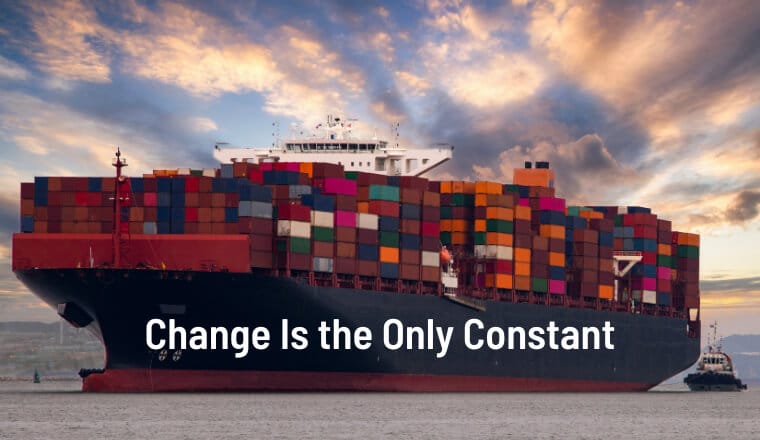
Change Is the Only Constant: How Specialty Chemicals Producers Can Build Resilience with AI
Raw material volatility. Ingredient restrictions. Geopolitical trade disruption. Customer demands that keep shifting. For specialty chemicals producers, change is not an occasional disruption. It is a permanent operating condition.